
Detox Pro & Perasetik Asit ile İki Aşamalı Temizlik ve Dezenfeksiyon Prosedürü
Taze meyve ve sebzeler; hasat, taşıma, depolama ve işleme aşamalarında toprak, toz, yüzey kirleri, mum benzeri tabakalar, bazı yüzey kaynaklı pestisit kalıntıları ve mikrobiyal yük ile temas edebilir. Özellikle hurma, portakal, elma, ayva gibi kabuklu ürünlerde yüzey tutunması daha belirgin olabilirken; domates, patlıcan ve benzeri hassas yüzeyli sebzelerde proses şartlarının daha dikkatli seçilmesi gerekir.
Gıda işletmelerinde yalnızca su ile yapılan yıkama, çoğu zaman yüzey kirinin azaltılmasına yardımcı olur; ancak her zaman hijyenik kontrol için yeterli olmayabilir. Bu nedenle profesyonel uygulamalarda daha doğru yaklaşım, önce temizlik, ardından kontrollü dezenfeksiyon prensibine dayanan iki aşamalı sistemlerdir.
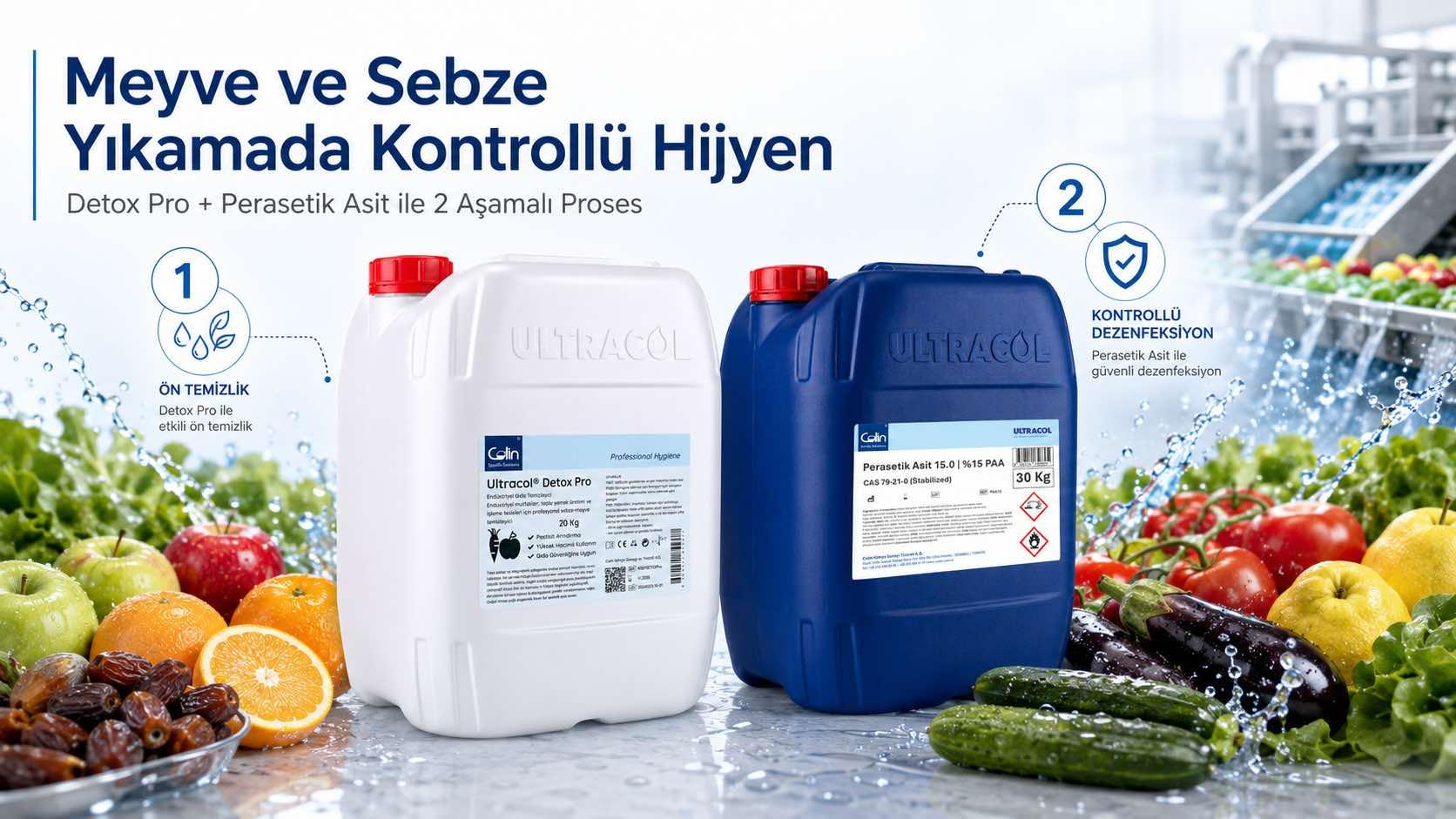
Bu yazıda; Ultracol® Detox Pro ile ön temizlik ve ardından Perasetik Asit 15.0 | %15 PAA ile kontrollü dezenfeksiyon uygulamasına dayanan, ölçülebilir ve kayıt altına alınabilir bir meyve-sebze hijyen prosedürü ele alınmaktadır.
İki Aşamalı Yıkama Daha Güvenlidir
Sahada sık yapılan hatalardan biri, yüzey temizliği yapılmadan doğrudan dezenfektan kullanılmasıdır.
Ancak meyve ve sebze yüzeyinde toprak, organik kir, mum tabakası, yağlı kalıntı veya yüksek organik yük varsa dezenfektanın etkinliği azalabilir.
Bu durumda dezenfektan;
-
Mikroorganizmaya yeterince ulaşamayabilir.
-
Organik yük tarafından hızlı tüketilebilir.
-
Ölçülen ppm değeri proses boyunca stabil kalmayabilir.
-
Aynı dozajda farklı ürün gruplarında farklı sonuç verebilir.
-
Denetim ve kalite kontrol açısından açıklanması zor bir proses oluşturabilir.
Bu nedenle doğru hijyen yaklaşımı şu şekilde özetlenebilir:
Önce yüzeyi temizle, organik yükü azalt; ardından kontrollü dezenfeksiyon uygula.
1. Aşama: Ultracol® Detox Pro ile Ön Temizlik
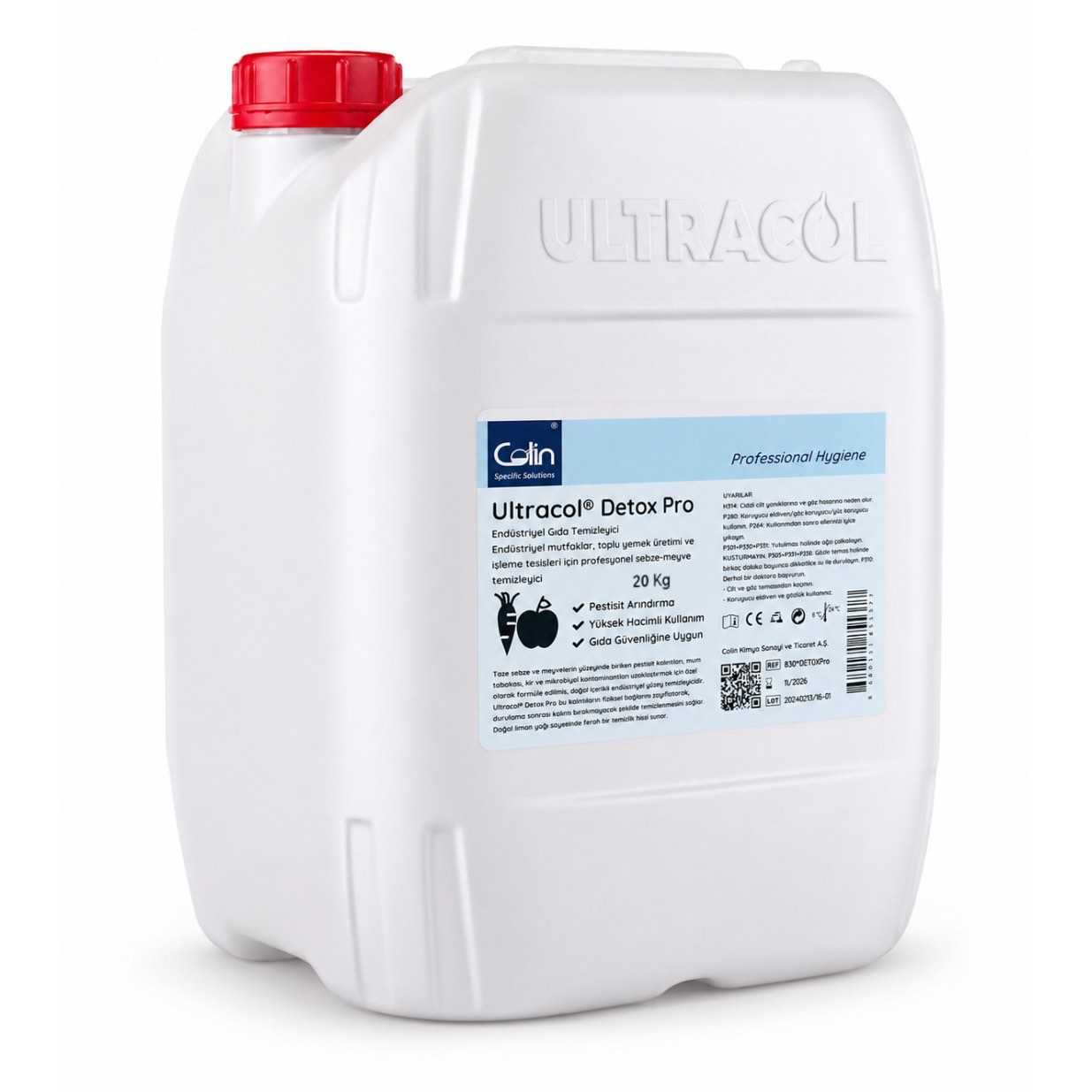
Ultracol® Detox Pro, gıda işletmelerinde meyve ve sebze ön yıkama prosesleri için tasarlanmış profesyonel bir yüzey temizleyici olarak konumlandırılır. Bu aşamanın amacı dezenfeksiyon değildir. Temel amaç, meyve-sebze yüzeyindeki kir, toz, organik yük, mum benzeri tabakalar ve bazı yüzey kaynaklı hidrofobik kalıntıların uzaklaştırılmasına yardımcı olmaktır.
Detox Pro; noniyonik yüzey aktifler, tamponlayıcı bileşenler ve yüzey ıslanmasını destekleyen yardımcı maddeler içerir. Bu yapı, ürün yüzeyinin su ile daha iyi temas etmesine ve sonraki dezenfeksiyon basamağına daha hazır hale gelmesine yardımcı olur.
Hangi Ürünlerde Kullanılabilir?
Pilot uygulama ile doğrulanmak kaydıyla aşağıdaki ürün gruplarında kullanılabilir:
-
Hurma
-
Elma
-
Portakal
-
Armut
-
Ayva
-
Domates
-
Patlıcan
-
Kabuklu ve pürüzlü yüzeyli meyveler
-
Hassas yüzeyli sebzeler
Burada önemli nokta şudur: Her meyve ve sebzenin yüzey yapısı farklıdır. Bu nedenle temas süresi, ürün hassasiyeti, su sıcaklığı ve mekanik hareket miktarı işletme şartlarına göre optimize edilmelidir.
Detox Pro Uygulama Şartları
Su miktarı: 100 L
Su kalitesi: İçme suyu kalitesinde
Sıcaklık: 15–25 °C
Uygulama süresi: 5–10 dakika
Dozaj: 5–10 mL Detox Pro / 1 L su
100 L su için dozaj:
| Uygulama Seviyesi | Detox Pro Miktarı |
|---|---|
| Hafif kirli ürünler | 500 mL / 100 L su |
| Orta-yüksek kir yükü | 750 mL / 100 L su |
| Kabuklu, pürüzlü veya mumlu yüzeyler | 1000 mL / 100 L su |
Detox Pro Uygulama Adımları
-
Uygulama tankına 100 L içme suyu kalitesinde su alınır.
-
Suya 500–1000 mL Ultracol® Detox Pro ilave edilir.
-
Çözelti homojen hale gelene kadar karıştırılır.
-
Meyve ve sebzeler çözeltiye tamamen temas edecek şekilde tanka alınır.
-
Ürün grubuna göre 5–10 dakika bekletilir.
-
Kabuklu, pürüzlü veya mumlu yüzeylerde 10 dakikaya yakın temas süresi tercih edilebilir.
-
Hassas yüzeyli ürünlerde daha kısa temas süresiyle pilot uygulama yapılmalıdır.
-
Süre sonunda ürünler tanktan çıkarılır.
-
Ürünler içme suyu kalitesinde bol su ile durulanır.
Bu aşama sonunda yüzeydeki kir, toprak, bazı yağlı kalıntılar, mum benzeri tabakalar ve yüzeye tutunmuş bazı kalıntıların azaltılması hedeflenir.
Önemli not:
Detox Pro, sistemik veya ürün dokusuna geçmiş pestisit kalıntılarını giderdiği iddiasıyla konumlandırılmamalıdır. Bu ürün, yüzey kaynaklı kir ve bazı yüzey kalıntılarının uzaklaştırılmasına yardımcı olan ön temizleyici olarak değerlendirilmelidir.
2. Aşama: Perasetik Asit 15.0 ile Kontrollü Dezenfeksiyon
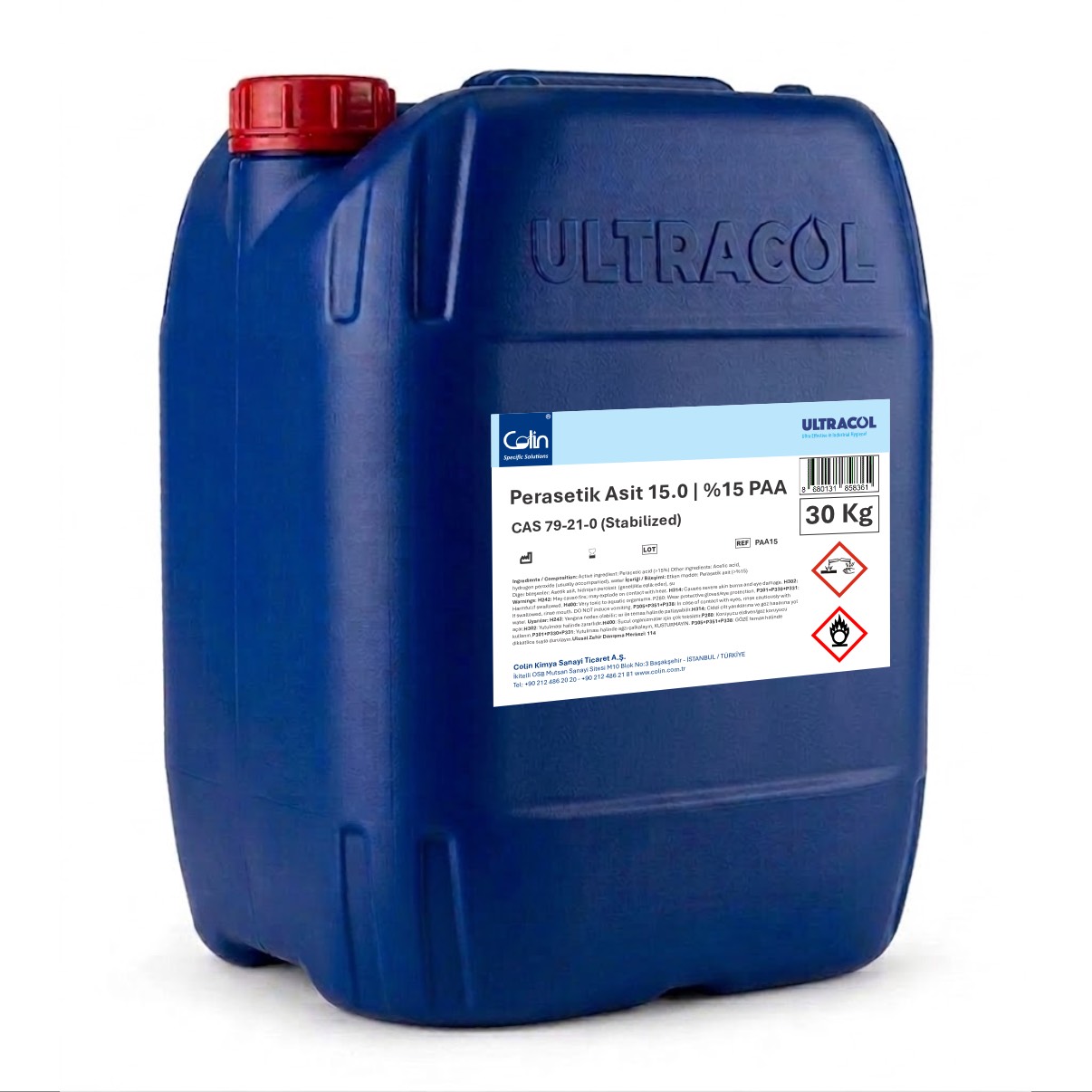
Ön temizlik ve ara durulama sonrası meyve-sebze yüzeyi, dezenfeksiyon basamağı için daha uygun hale gelir. Bu aşamada Perasetik Asit 15.0 | %15 PAA, klor içermeyen oksidatif dezenfeksiyon amacıyla kullanılır.
Perasetik asit; düşük konsantrasyonlarda etkili olabilen, geniş mikrobiyal etki spektrumuna sahip güçlü bir oksidatif dezenfektandır. Klor bazlı ürünlerden farklı olarak serbest klor kalıntısı oluşturmaz ve klorat/perklorat gibi klor kaynaklı yan ürün riski taşımaz.
Ancak PAA uygulamasında da doğru dozaj, temas süresi, organik yük kontrolü, son durulama ve kalıntı doğrulaması önemlidir.
Neden PAA?
Perasetik asit, meyve-sebze hijyen proseslerinde şu avantajları nedeniyle tercih edilebilir:
-
Klor içermez.
-
Serbest klor kalıntısı oluşturmaz.
-
Klorat/perklorat riski taşımaz.
-
Düşük ppm seviyelerinde etkili oksidatif hijyen sağlar.
-
Test strip veya uygun test kiti ile ölçülebilir.
-
Proses kayıtlarına uygun şekilde takip edilebilir.
-
Organik yük azaltıldıktan sonra daha verimli çalışır.
Burada özellikle vurgulanması gereken nokta şudur:
PAA “kalıntı bırakmaz” şeklinde değil, “doğru dozaj, uygun temas süresi, durulama ve kalıntı kontrolü ile düşük kalıntı profili sunar” şeklinde ifade edilmelidir.
Hedef PAA Konsantrasyonu
Genel meyve-sebze hijyen uygulamaları için başlangıç pilot aralığı olarak:
50–80 ppm PAA
önerilebilir.
Bu aralık, ürün tipi, yüzey yapısı, mikrobiyal yük, su kalitesi, sıcaklık ve proses hedeflerine göre işletme bazında doğrulanmalıdır.
Perasetik Asit 15.0 İçin Dozaj Hesabı
Perasetik Asit 15.0 yaklaşık %15 PAA içerdiği için pratik hesap şu şekilde yapılabilir:
| Hedef PAA Konsantrasyonu | %15 PAA Ürün Dozajı |
|---|---|
| 50 ppm | 0.33 mL / 1 L su |
| 60 ppm | 0.40 mL / 1 L su |
| 75 ppm | 0.50 mL / 1 L su |
| 80 ppm | 0.53 mL / 1 L su |
100 L su için örnek dozaj:
| Hedef PAA | Perasetik Asit 15.0 Miktarı |
|---|---|
| 50 ppm | 33 mL / 100 L su |
| 60 ppm | 40 mL / 100 L su |
| 75 ppm | 50 mL / 100 L su |
| 80 ppm | 53 mL / 100 L su |
Genel uygulama için pratik öneri:
100 L suya 40–50 mL Perasetik Asit 15.0 ilave edilerek yaklaşık 60–75 ppm PAA çalışma çözeltisi hazırlanabilir.
PAA Uygulama Şartları
Su miktarı: 100 L
Su kalitesi: İçme suyu kalitesinde
Hedef PAA: 50–80 ppm
Önerilen başlangıç seviyesi: 60–75 ppm
Temas süresi: 1–3 dakika
Sıcaklık: 15–25 °C
Kontrol: PAA test strip veya kolorimetrik PAA test kiti
PAA Uygulama Adımları
-
Ayrı bir dezenfeksiyon tankına 100 L içme suyu kalitesinde su alınır.
-
Hedef konsantrasyona göre 40–50 mL Perasetik Asit 15.0 ilave edilir.
-
Çözelti homojen şekilde karıştırılır.
-
Mümkünse uygulama öncesi PAA seviyesi test strip veya uygun test kiti ile kontrol edilir.
-
Ön temizliği ve ara durulaması yapılmış ürünler PAA banyosuna alınır.
-
Ürün grubu ve proses hedeflerine göre 1–3 dakika temas süresi uygulanır.
-
Süre sonunda ürünler banyodan çıkarılır.
-
Ürün tipine ve işletme prosedürüne göre içme suyu kalitesinde son durulama yapılır.
-
Son durulama suyu veya ürün yüzeyi, gerekli görülürse PAA kalıntısı açısından kontrol edilir.
-
Ölçülen değerler proses kayıt formuna işlenir.
Kritik Uyarı: Detox Pro ve PAA Aynı Tankta Karıştırılmamalıdır
Bu prosedürde Detox Pro ve Perasetik Asit aynı banyoda kullanılmamalıdır.
Doğru proses sırası şu şekilde olmalıdır:
Detox Pro ön temizlik → ara durulama → ayrı PAA dezenfeksiyon banyosu → gerekli ise son durulama → kalıntı kontrolü
Detox Pro banyosundaki yüzey aktif maddeler, organik yük ve tamponlayıcı bileşenler PAA tüketimini artırabilir. Bu nedenle PAA’nın en etkili ve ölçülebilir şekilde çalışması için ayrı, temiz ve düşük organik yüklü bir tankta uygulanması önerilir.
Klor Bazlı Yıkama Proseslerine Göre Avantajı Nedir?
Meyve-sebze yıkamada klor/hipoklorit bazlı ürünler yaygın olarak kullanılır. Ancak bu proseslerde uygulama sonrası serbest klor kalıntısı, durulama suyuna klor taşınması veya klorat/perklorat gibi klor kaynaklı yan ürün riskleri ayrıca değerlendirilmelidir.
Detox Pro + Perasetik Asit 15.0 sistemi, klor bazlı proseslere alternatif olarak şu avantajları sunar:
-
Serbest klor kalıntısı oluşturmaz.
-
Klorat/perklorat yan ürün riski taşımaz.
-
Ön temizlik ve dezenfeksiyon aşamalarını birbirinden ayırır.
-
PAA seviyesi ppm olarak ölçülebilir.
-
Proses kayıt altına alınabilir.
-
Durulama ve kalıntı kontrolüyle daha kontrollü bir hijyen yaklaşımı sağlar.
-
Denetimlerde teknik olarak daha açıklanabilir bir proses akışı sunar.
Bu nedenle bu sistem, özellikle işlem sonrası serbest klor kalıntısı problemi yaşayan işletmeler için daha kontrollü bir alternatif olarak değerlendirilebilir.
Denetimlerde Proses Nasıl Açıklanabilir?
Gıda işletmelerinde yapılan denetimlerde genellikle şu sorular önemlidir:
-
Hangi ürün, hangi amaçla kullanılıyor?
-
Ürün temizlik için mi, dezenfeksiyon için mi kullanılıyor?
-
Dozaj nasıl belirleniyor?
-
Temas süresi kayıt altına alınıyor mu?
-
Dezenfektan seviyesi ölçülüyor mu?
-
Son durulama yapılıyor mu?
-
Kalıntı kontrolü uygulanıyor mu?
-
Operatör uygulaması standart mı?
Bu prosedür şu şekilde açıklanabilir:
Meyve ve sebzelerde önce Ultracol® Detox Pro ile yüzey temizliği yapılıyor. Bu aşamada kir, organik yük ve yüzey kalıntılarının azaltılması hedefleniyor. Ardından ürünler durulanıyor ve ayrı bir tankta ppm kontrollü Perasetik Asit 15.0 çözeltisi ile dezenfeksiyon uygulanıyor. Proses sonunda ürün tipine göre son durulama ve kalıntı kontrolü yapılarak uygulama kayıt altına alınıyor.
Bu açıklama; temizlik ve dezenfeksiyonun birbirinden ayrıldığını, dozajın ölçülebilir olduğunu ve prosesin kayıtlanabilir olduğunu gösterir.
Kayıt Altına Alınması Önerilen Bilgiler
Profesyonel uygulamalarda aşağıdaki bilgilerin kayıt altına alınması önerilir:
| Kayıt Parametresi | Açıklama |
|---|---|
| Tarih ve saat | Uygulamanın yapıldığı zaman |
| Ürün grubu | Hangi meyve/sebze işlendi |
| Tank hacmi | Detox Pro ve PAA tank hacimleri |
| Su kalitesi | İçme suyu/proses suyu bilgisi |
| Detox Pro dozu | mL/L veya toplam mL |
| Detox Pro temas süresi | dakika |
| Ara durulama | yapıldı/yapılmadı |
| PAA dozu | mL/100 L |
| Ölçülen PAA değeri | ppm |
| PAA temas süresi | dakika |
| Son durulama | yapıldı/yapılmadı |
| Kalıntı kontrolü | PAA veya serbest klor kontrolü |
| Operatör | Uygulamayı yapan kişi |
| Onay | Kalite sorumlusu / vardiya sorumlusu |
Bu kayıt sistemi, prosesin tekrarlanabilirliğini artırır ve işletme içi kalite güvence açısından güçlü bir dokümantasyon sağlar.
Ürün Gruplarına Göre Uygulama Yaklaşımı
Her meyve-sebze grubu aynı şekilde değerlendirilmemelidir.
Kabuklu ve Dayanıklı Ürünler
Örnekler:
-
Portakal
-
Elma
-
Ayva
-
Armut
-
Hurma
Bu ürünlerde Detox Pro temas süresi genellikle 5–10 dakika aralığında değerlendirilebilir. PAA uygulaması ise 1–3 dakika aralığında pilot çalışma ile doğrulanabilir.
Hassas Yüzeyli Ürünler
Örnekler:
-
Domates
-
Patlıcan
-
Biber
-
Salatalık
Bu ürünlerde daha kısa temas süreleri tercih edilmeli, yüzey yumuşaması, parlaklık kaybı veya kalite değişimi açısından pilot uygulama yapılmalıdır.
Yapraklı Ürünler
Yapraklı ürünlerde proses daha dikkatli tasarlanmalıdır. Yaprak yüzeyi daha geniş olduğu için kimyasal taşınması ve durulama etkinliği ayrıca kontrol edilmelidir. Bu ürün grubunda düşük doz, kısa temas süresi, iyi durulama ve kalıntı kontrolü özellikle önemlidir.
Sonuç: Ölçülebilir, Kayıtlanabilir ve Daha Kontrollü Bir Hijyen Yaklaşımı
Ultracol® Detox Pro + Perasetik Asit 15.0 sistemi, meyve ve sebze yıkamada temizlik ve dezenfeksiyon basamaklarını birbirinden ayıran profesyonel bir proses yaklaşımı sunar.
Bu sistemde Detox Pro, yüzey kirlerini ve organik yükü azaltmaya yardımcı olan ön temizleyici olarak görev yapar. Perasetik Asit 15.0 ise ayrı bir banyoda, ppm kontrollü dezenfeksiyon amacıyla kullanılır.
Klor bazlı yıkama proseslerine göre en önemli avantajı; serbest klor kalıntısı oluşturmaması ve klorat/perklorat gibi klor kaynaklı yan ürün risklerini taşımamasıdır. Bununla birlikte prosesin güvenli ve savunulabilir olması için doğru dozaj, temas süresi, ara durulama, son durulama ve kalıntı kontrolü birlikte yönetilmelidir.
Özetle:
Ön temizlik + ara durulama + ppm kontrollü PAA dezenfeksiyonu + kalıntı kontrolü, meyve ve sebze hijyeninde daha ölçülebilir, daha açıklanabilir ve daha profesyonel bir uygulama yaklaşımı sağlar.