


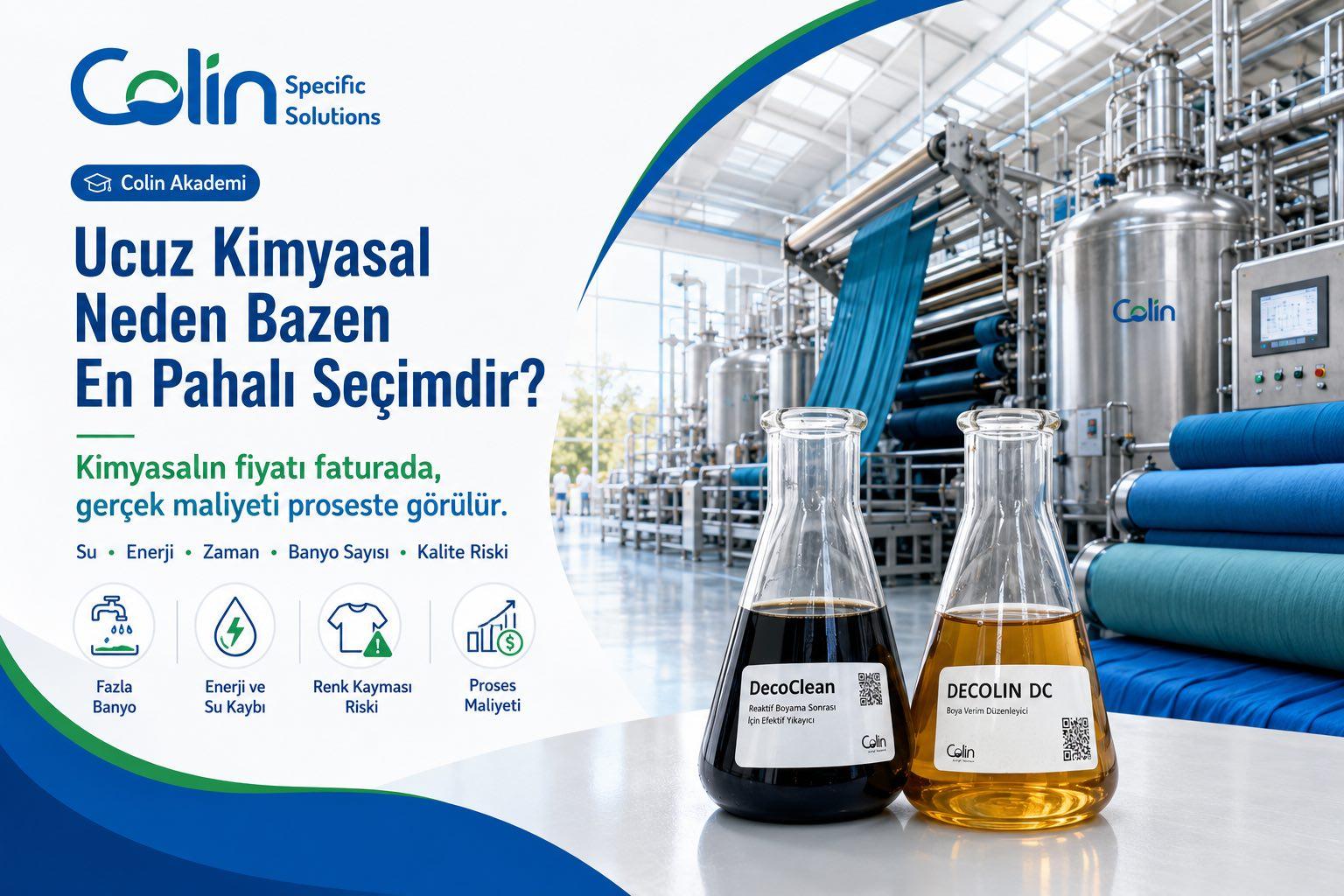
Kimyasalın fiyatı faturada, gerçek maliyeti proseste görülür.
Boyahanelerde yardımcı kimyasal seçimi çoğu zaman kilogram fiyatı üzerinden yapılır. Satın alma birimi için en ucuz ürün cazip görünür. Ancak işletme müdürü, üretim sorumlusu veya boyahane sahibi için asıl soru farklıdır:
Bu kimyasal proseste neyi değiştiriyor?
Çünkü boyahanede kimyasal maliyeti sadece satın alma fiyatından ibaret değildir. Gerçek maliyet; banyo sayısında, işlem süresinde, su tüketiminde, buhar ve enerji giderinde, kumaş yıpranmasında, renk kaymasında, tekrar işlem riskinde, müşteri şikâyetinde ve kaybedilen kapasitede ortaya çıkar.
Bu nedenle ucuz görünen bir ürün, prosesi uzatıyor veya kaliteyi dalgalandırıyorsa işletmeye pahalıya gelir.
Reaktif boyama sonrası yıkama neden kritik bir prosestir?
Pamuk, modal ve viskon kumaşların reaktif boyamasında birçok işletme yaklaşık 20 g/L soda ile çalışır. Boyama tamamlandığında kumaş ve banyo üzerinde yalnızca boya kalıntısı bulunmaz.
Aynı zamanda:
-
soda kalıntısı,
-
tuz yükü,
-
hidrolize olmuş reaktif boya,
-
yüzeye tutunmamış boya artıkları,
-
alkali yük,
-
çözünmüş ve askıda kalan organik kalıntılar
sistemde kalır.
Bu nedenle boyama sonrası işlem basit bir “sabunlama” olarak görülmemelidir. Bu aşama aslında standart üretimi koruyan en kritik temizleme ve stabilizasyon basamaklarından biridir.
Buradaki amaç sadece köpüren bir deterjan kullanmak değildir. Amaç, kumaş üzerindeki ve banyo içerisindeki atık boya, tuz, soda ve alkali kalıntılarını kontrollü şekilde uzaklaştırmaktır.
Ucuz sabunlama ürünü neden yeterli olmayabilir?
Bazı işletmelerde reaktif boyama sonrası yıkama için yaklaşık 1 g/L ucuz, düşük konsantrasyonlu, deterjan esaslı sabunlama ürünleri kullanılır.
Bu ürünler ilk bakışta ekonomik görünür. Çünkü kilogram fiyatı düşüktür. Ancak aktif madde oranı düşükse, formülasyon sadece klasik deterjan etkisine dayanıyorsa ve ürün reaktif boyama sonrası kalıntıları hedefli şekilde uzaklaştırmak için tasarlanmamışsa, gerçek maliyet proses içinde büyür.
Bu durumda işletme ürünü ucuza almış olabilir; fakat suyu, enerjiyi, zamanı ve kalite riskini pahalıya satın almış olur.
İşletmenin kayıpları nerede oluşur?
1. Renk kayması ve standart üretim riski
Reaktif boyama sonrası yeterli temizlik sağlanmadığında kumaş üzerinde kalan hidrolize boya ve alkali kalıntıları sonraki banyolarda hareketlenebilir.
Bu durum:
-
renk tonunda kaymaya,
-
parti içi farklılığa,
-
partiler arası ton değişimine,
-
laboratuvar reçetesi ile üretim sonucunun ayrışmasına,
-
müşterinin onayladığı standardın bozulmasına,
-
tekrar yıkama veya düzeltme ihtiyacına
neden olabilir.
Bu aşamada kayıp sadece kimyasal maliyeti değildir. Asıl kayıp, standart üretimin bozulmasıdır.
Bir boyahane için standart üretimin bozulması; termin, müşteri güveni ve kârlılık açısından en pahalı problemlerden biridir.
2. Gereksiz banyo sayısı
Birçok işletmede boyama ile yumuşatma arasında en az 6 banyo işlem yapılır. Bu banyoların bir kısmı sıcak, bir kısmı soğuk durulama veya nötralizasyon banyosudur.
Her banyonun ortalama en az 30 dakika sürdüğü düşünülürse, sadece ara yıkama ve durulama işlemleri için ciddi bir makine zamanı harcanır.
Bu durum işletmeye şu maliyetleri getirir:
-
daha fazla su tüketimi,
-
daha fazla buhar kullanımı,
-
daha fazla elektrik tüketimi,
-
daha uzun makine meşguliyeti,
-
daha fazla operatör takibi,
-
daha düşük günlük üretim kapasitesi,
-
daha yüksek atık su hacmi,
-
daha fazla termin baskısı.
Ucuz görünen ürün, eğer banyo sayısını azaltamıyor ve tek başına yeterli temizlik sağlayamıyorsa, işletme kimyasalda kazandığını proses maliyetinde fazlasıyla kaybeder.
3. Nötralizasyon ve durulama yükünün artması
Reaktif boyama sonrası kullanılan soda nedeniyle kumaşta ve banyoda alkali yük kalır. Bu nedenle birçok işletme 0,8–1,2 g/L asetik asit ile nötralizasyon yapar.
Ancak yıkama kimyası doğru seçilmemişse, soda ve tuz kalıntıları yeterince uzaklaştırılamaz. Bu durumda nötralizasyon daha zor kontrol edilir.
Bunun sonucunda:
-
asetik asit tüketimi artabilir,
-
pH stabilitesi bozulabilir,
-
sonraki yumuşatma banyosunda uyumsuzluk görülebilir,
-
silikon veya yumuşatıcı performansı düşebilir,
-
kumaş tutumu sertleşebilir,
-
renk stabilitesi olumsuz etkilenebilir.
Yani yanlış yıkama kimyası sadece yıkama banyosunu değil, nötralizasyon ve yumuşatma performansını da etkiler.
4. Kumaş yıpranması ve tutum kaybı
Her ilave banyo kumaş için ekstra mekanik etki demektir. Özellikle viskon, modal ve hassas pamuklu kumaşlarda uzun süren sıcak-soğuk işlem döngüleri kumaş tutumunu etkileyebilir.
Gereksiz banyo sayısı arttıkça:
-
kumaş daha fazla mekanik strese maruz kalır,
-
yüzey tüylenmesi artabilir,
-
tutum sertleşebilir,
-
yumuşatıcı ihtiyacı artabilir,
-
kumaşın ticari değeri düşebilir.
Bu durumda işletme önce yıkama prosesinde kaybeder, sonra oluşan tutum problemini düzeltmek için tekrar kimyasal ve zaman harcar.
5. Enerji, zaman ve işçilik kaybı
Boyahanede proses süresi doğrudan kapasite demektir. Makine aynı partide ne kadar uzun kalırsa, günlük üretilebilecek toplam miktar o kadar düşer.
Ucuz ama etkisiz bir ürün nedeniyle 1 veya 2 banyo fazladan çalışılıyorsa, bunun maliyeti sadece su değildir.
İşletme aynı anda şunları kaybeder:
-
makine zamanı,
-
operatör zamanı,
-
buhar,
-
elektrik,
-
su,
-
arıtma kapasitesi,
-
üretim planlama esnekliği,
-
günlük üretim kapasitesi.
Bu yüzden bazı kimyasalların gerçek maliyeti satın alma sırasında değil, proses uzadığında ortaya çıkar.
Ucuz ürünün işletmeye toplam maliyeti
Düşük konsantrasyonlu ve hedef dışı formüle edilmiş bir sabunlama/yıkama ürünü işletmede şu kayıplara neden olabilir:
-
Daha fazla banyo ihtiyacı
-
Daha uzun proses süresi
-
Daha fazla su tüketimi
-
Daha fazla buhar ve enerji gideri
-
Daha fazla asetik asit tüketimi
-
Daha fazla yardımcı kimyasal kullanımı
-
Daha yüksek atık su yükü
-
Kumaşta tutum ve yüzey kaybı
-
Renk kayması riski
-
Standart üretimin bozulması
-
Tekrar yıkama veya düzeltme ihtiyacı
-
Makine kapasitesinde düşüş
-
İşçilik ve takip yükünde artış
-
Müşteri şikâyeti riski
-
Termin gecikmesi
Bu nedenle düşük fiyatlı bir kimyasal, eğer prosesi uzatıyor ve kaliteyi kontrolsüz hale getiriyorsa, işletme için gerçekte pahalı hale gelir.
Doğru çözüm: Sabun değil, prosese özel yıkayıcı kimyasal
Reaktif boyama sonrası kullanılacak ürün klasik anlamda sadece “sabun” olarak düşünülmemelidir.
Doğru ürün;
-
hidrolize boyayı uzaklaştırmaya,
-
soda kalıntısını azaltmaya,
-
tuz yükünü düşürmeye,
-
yüzeyde tutunmamış boya artıklarını çözmeye,
-
alkali yükü kontrol etmeye,
-
sonraki nötralizasyonu kolaylaştırmaya,
-
yumuşatma banyosunu güvenli hale getirmeye,
-
renk stabilitesini korumaya,
-
banyo sayısını azaltmaya
odaklanmalıdır.
Bu nedenle yüksek konsantre, doğru hammadde seçimiyle hazırlanmış ve prosese göre formüle edilmiş bir yıkayıcı kimyasal, işletmeye klasik ucuz sabunlama ürünlerinden çok daha fazla avantaj sağlar.
Colin Kimya danışmanlığında kendi kimyasalınızı üretmenin avantajı
Boyahaneler çoğu zaman hazır yardımcı kimyasal satın alır. Bu ürünlerin bir kısmı yüksek aktif madde içerir, bir kısmı ise düşük konsantrasyonlu ve ticari olarak şişirilmiş formülasyonlardan oluşur.
Ancak burada kritik bir soru vardır:
İşletme kendi prosesine uygun ürünü, doğru hammadde ve doğru formülasyonla kendisi üretebilirse neden hazır ürüne bağımlı kalsın?
Colin Kimya danışmanlığında amaç, boyahanenin sadece daha ucuz kimyasal kullanması değildir. Asıl amaç, işletmenin kendi proses değerlerine uygun, test edilmiş, sürdürülebilir ve ölçülebilir performans sağlayan yardımcı kimyasalı kendi bünyesinde üretebilmesidir.
Bu yaklaşım işletmeye şu avantajları sağlar:
1. Aynı maliyetle daha yüksek aktif madde
Piyasada ucuz görünen birçok ürün düşük aktif madde oranı nedeniyle yüksek dozajla kullanılır. İşletme ürünü ucuz alır, fakat banyoda daha fazla kullanmak zorunda kalır.
Colin Kimya danışmanlığında geliştirilen formülasyonlarda amaç, gereksiz dolgu ve düşük etkili bileşenlerden uzak durarak doğru aktif madde dengesini kurmaktır.
Böylece işletme:
-
daha düşük dozajla çalışabilir,
-
ürün tüketimini azaltabilir,
-
stok ve taşıma yükünü düşürebilir,
-
daha kontrollü proses sonucu alabilir.
2. Hazır ürün yerine prosese özel formülasyon
Her boyahanenin çalıştığı kumaş tipi, boya sınıfı, makine yapısı, flotte oranı, su kalitesi, reçete alışkanlığı ve müşteri beklentisi farklıdır.
Bu nedenle her işletmeye aynı ürünü vermek çoğu zaman ideal çözüm değildir.
Colin Kimya danışmanlığında ürün, işletmenin gerçek prosesine göre değerlendirilir:
-
pamuk, modal, viskon gibi elyaf tipleri,
-
kullanılan soda miktarı,
-
tuz yükü,
-
boya konsantrasyonu,
-
yıkama sıcaklığı,
-
mevcut banyo sayısı,
-
nötralizasyon ihtiyacı,
-
yumuşatma öncesi pH ve iletkenlik değerleri,
-
renk kayması ve haslık sonuçları
birlikte incelenir.
Buna göre işletmeye özel yıkayıcı, sabunlama, nötralizasyon destek ürünü veya kombine proses kimyası geliştirilebilir.
3. Ürün sayısında azalma
Geleneksel proseste birden fazla ürün kullanılır:
-
sabunlama ürünü,
-
deterjan,
-
dispers yardımcı,
-
nötralizasyon ürünü,
-
ilave yıkayıcı,
-
gerekirse düzeltici kimyasal.
Doğru formülasyonla bu ürünlerin bir kısmı tek bir daha güçlü ve hedefli ürün altında toplanabilir.
Bu sayede işletme:
-
daha az ürün yönetir,
-
reçete karmaşasını azaltır,
-
operatör hatası riskini düşürür,
-
satın alma ve stok takibini kolaylaştırır,
-
proses standardizasyonunu artırır.
4. Sıcak ve soğuk banyo sayısında azalma
Doğru yıkayıcı kimyasalın en önemli hedeflerinden biri gereksiz banyo sayısını azaltmaktır.
Eğer mevcut proseste boyama ile yumuşatma arasında 6 banyo kullanılıyorsa, bu banyoların her biri su, zaman, enerji ve işçilik demektir.
Colin Kimya danışmanlığında yapılacak çalışma ile amaç:
-
hangi banyonun gerçekten gerekli olduğunu belirlemek,
-
hangi banyonun kimyasal performansla azaltılabileceğini görmek,
-
sıcak yıkama ve soğuk durulama sayılarını optimize etmek,
-
nötralizasyonu daha kontrollü hale getirmek,
-
yumuşatma öncesi kumaşı güvenli pH ve iletkenlik aralığına getirmektir.
Bu yaklaşım doğrudan işletme kapasitesine etki eder.
5. Ölçülebilir proses kontrolü
Bir ürünün iyi olması sadece iddia ile kabul edilmemelidir. Ürün performansı proses verisi ile ispatlanmalıdır.
Bu nedenle Colin Kimya danışmanlığında önerilecek üretim modeli yalnızca formül vermekten ibaret değildir. Ürün işletme koşullarında test edilir ve proses değerleriyle değerlendirilir.
Kontrol edilebilecek başlıca parametreler:
-
banyo pH değeri,
-
yıkama sonrası pH,
-
iletkenlik değişimi,
-
renk kayması,
-
haslık sonuçları,
-
sabunlama etkinliği,
-
kumaş tutumu,
-
yumuşatma uyumu,
-
banyo sayısı,
-
toplam proses süresi,
-
su ve enerji tüketimi,
-
tekrar işlem ihtiyacı.
Bu sayede işletme, kimyasal kararını sadece fiyatla değil, ölçülebilir proses sonucu ile verir.
Hazır ürün almak mı, kendi prosesine uygun ürün üretmek mi?
Hazır kimyasal satın alırken işletme çoğu zaman ürünün gerçek formülasyonunu, aktif madde oranını ve hangi hammaddelerle hazırlandığını bilmez.
Ürün çalışıyorsa kullanılır, çalışmıyorsa dozaj artırılır veya yeni ürün aranır. Ancak bu yaklaşım işletmeyi sürekli tedarikçiye bağımlı hale getirir.
Kendi kimyasalını Colin Kimya danışmanlığında üreten işletme ise daha farklı bir avantaj elde eder:
-
hangi hammaddenin neden kullanıldığını bilir,
-
aktif madde oranını kontrol eder,
-
formülasyonu kendi prosesine göre şekillendirir,
-
maliyeti şeffaf şekilde görür,
-
performansı test ederek doğrular,
-
ürünü gerektiğinde revize edebilir,
-
tedarik bağımlılığını azaltır,
-
proses bilgisini kendi bünyesinde güçlendirir.
Bu sadece kimyasal üretmek değildir. Bu, boyahanenin proses kontrolünü kendi eline almasıdır.
İşletme ne kazanır?
Colin Kimya danışmanlığında doğru hammadde ve doğru formülasyonla kendi yıkayıcı kimyasalını üreten bir boyahane şu alanlarda avantaj elde edebilir:
-
Daha düşük kg bazlı ürün maliyeti
-
Daha yüksek aktif madde oranı
-
Daha düşük kullanım dozu
-
Daha az ürün çeşidi
-
Daha kısa yıkama prosesi
-
Daha az sıcak ve soğuk banyo
-
Daha düşük su tüketimi
-
Daha düşük buhar ve enerji gideri
-
Daha kontrollü nötralizasyon
-
Daha stabil renk sonucu
-
Daha düşük renk kayması riski
-
Daha iyi yumuşatma uyumu
-
Daha az tekrar işlem
-
Daha düşük atık su yükü
-
Daha yüksek makine kapasitesi
-
Daha şeffaf ve sürdürülebilir maliyet yapısı
Bu avantajlar birlikte değerlendirildiğinde, işletme sadece kimyasal satın alma maliyetini değil, toplam proses maliyetini düşürme imkânı elde eder.
Sonuç: Kimyasalı satın almak yerine prosesi yönetmek
Ucuz kimyasal kullanmak her zaman tasarruf anlamına gelmez. Aynı şekilde pahalı ürün kullanmak da her zaman kalite garantisi değildir.
Doğru yaklaşım şudur:
Kimyasalın işletmeye sağladığı değer, proses verileriyle ölçülmelidir.
Reaktif boyama sonrası yıkama prosesinde kullanılacak ürün; sadece sabunlama yapmamalı, atık boya, tuz, soda ve alkali kalıntılarını uzaklaştırmaya odaklanmalıdır. Banyo sayısını azaltmalı, renk stabilitesini korumalı, nötralizasyonu kolaylaştırmalı ve yumuşatma öncesi kumaşı güvenli hale getirmelidir.
Colin Kimya danışmanlığında kendi kimyasalını üreten boyahaneler, bu süreci hazır ürünlere bağımlı kalmadan, kendi proseslerine uygun şekilde yönetebilir.
Doğru hammadde, doğru formülasyon ve ölçülebilir proses kontrolü ile işletme hem kimyasal maliyetini hem de görünmeyen proses kayıplarını azaltabilir.
Çünkü boyahanede asıl hedef sadece ucuz ürün kullanmak değildir.
Asıl hedef; daha az banyo, daha kısa süre, daha düşük enerji, daha stabil renk, daha güvenli üretim ve daha düşük toplam maliyettir.
Kimyasalın fiyatı faturada, gerçek maliyeti proseste görülür.
